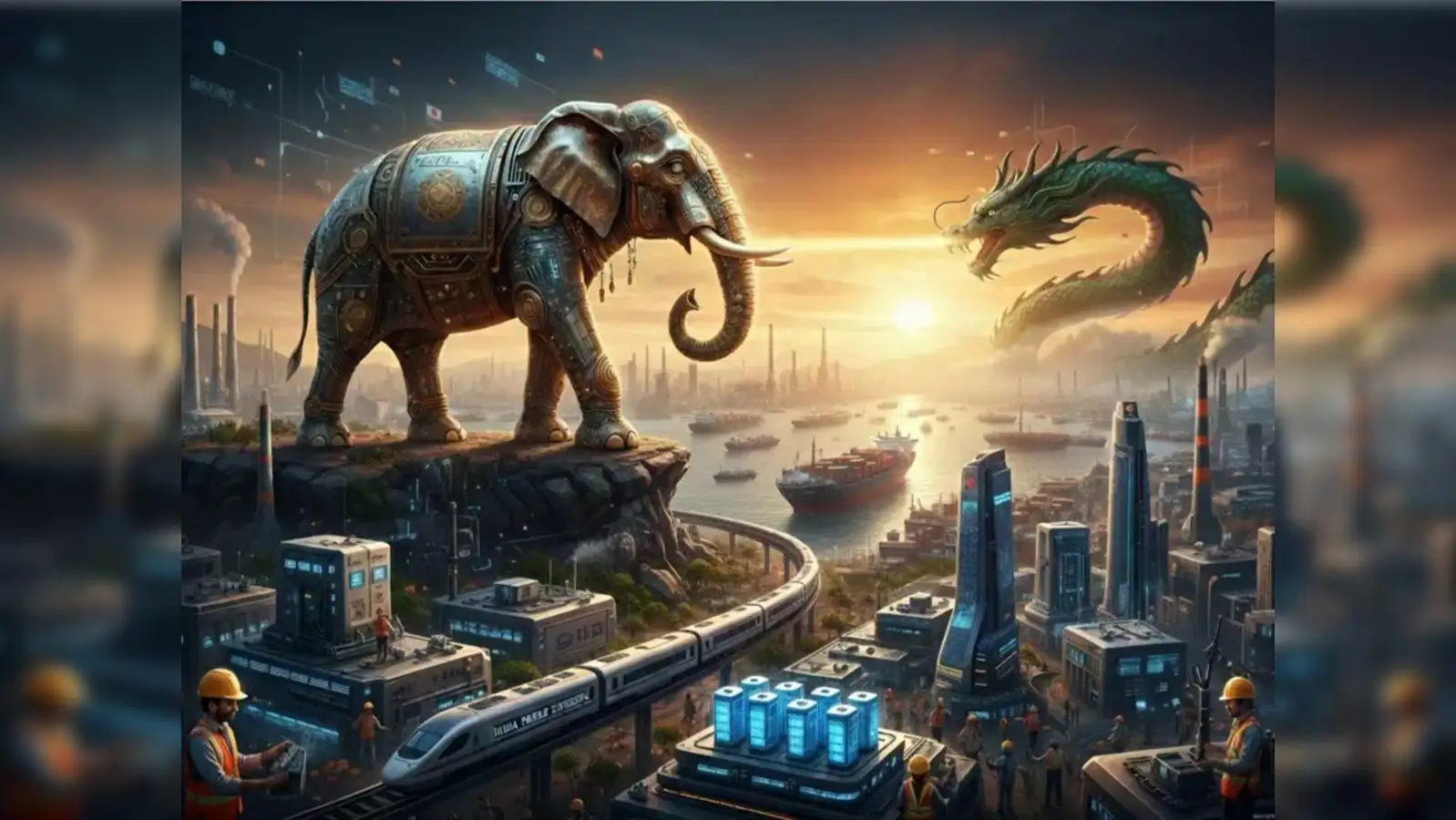
India has long harbored ambitions of becoming a global manufacturing and technological powerhouse, a vision often referred to as “India’s China dream.” With China having established itself as the world’s factory and a dominant player in global trade, India has sought to replicate aspects of this model while leveraging its own demographic and economic advantages. As 2026 approaches, the question arises: can India truly realize this dream, and what factors will determine its success?
Understanding India’s China Dream
The term “China dream” in India’s context refers to aspirations of becoming a manufacturing hub, boosting exports, creating jobs, and achieving technological self-reliance. It involves attracting large-scale investments, improving infrastructure, and fostering an ecosystem where domestic industries can compete globally.
India’s demographic dividend, with a young and growing workforce, provides a potential advantage over China, where the labor force is aging. Coupled with increasing domestic consumption and a burgeoning middle class, India possesses the market demand to support industrial growth. However, transforming these advantages into reality requires strategic planning, policy support, and efficient execution.
Government Initiatives Driving the Dream
Several government programs aim to propel India closer to this ambition. Initiatives such as “Make in India,” “Production Linked Incentive (PLI) schemes,” and investment in industrial corridors have created favorable conditions for manufacturing expansion. These efforts are designed to attract foreign and domestic investors, enhance infrastructure, and encourage technology adoption.
Special Economic Zones (SEZs) and industrial clusters have also been established to provide streamlined regulatory support and logistics facilities. By reducing bureaucratic hurdles and offering incentives, these programs seek to make India an attractive alternative to China for global investors.
Infrastructure and Logistics Challenges
While India has made progress in developing infrastructure, challenges remain. Reliable power supply, efficient transportation networks, and modern logistics are critical to supporting large-scale manufacturing. Compared to China, India still faces gaps in road and rail connectivity, port efficiency, and warehousing capacity.
Improving infrastructure is not just about building new facilities; it also involves maintaining and upgrading existing systems. For India to realize its manufacturing ambitions by 2026, consistent investment in roads, ports, railways, and energy infrastructure is essential.
Human Capital and Skill Development
One of India’s greatest advantages is its young workforce. However, converting this demographic potential into productivity requires skill development and vocational training. Programs that focus on technical skills, digital literacy, and industrial expertise are crucial for bridging the gap between workforce availability and industry requirements.
Collaborations with foreign companies, vocational institutes, and technology partners can help India accelerate skill enhancement. Without a skilled labor force, even the best infrastructure and policies may fail to deliver the desired manufacturing output.
Technology and Innovation
India’s ambition cannot rely solely on labor-intensive manufacturing; technological advancement is equally important. Industries such as electronics, semiconductors, and electric vehicles require high-tech capabilities, research and development, and innovation ecosystems.
Encouraging domestic startups, fostering research institutes, and facilitating technology transfer are key to ensuring that India moves up the value chain, rather than competing only on low-cost labor. The ability to innovate and produce high-value goods will be central to achieving the China-level manufacturing dream.
Global Trade and Investment Climate
India’s manufacturing ambitions also depend on global trade conditions and foreign investment. Geopolitical tensions, supply chain realignments, and trade agreements influence investment flows and export opportunities.
Countries seeking alternatives to China due to rising costs, regulatory complexities, or geopolitical concerns may look to India as a manufacturing partner. By providing stable policy frameworks, transparent regulations, and investor-friendly environments, India can attract a significant share of such investments.
Challenges and Risks
Despite favorable conditions, several challenges could impede progress. Regulatory complexity, bureaucratic delays, and inconsistencies in policy implementation have historically deterred investors. Additionally, competition from other emerging economies like Vietnam, Indonesia, and Bangladesh may affect India’s ability to become the preferred manufacturing hub.
Environmental concerns and sustainability requirements are also increasingly influencing global trade. India will need to adopt eco-friendly practices, renewable energy integration, and responsible manufacturing methods to meet international standards.
Success Stories and Momentum
There are positive indicators that India is moving in the right direction. Several sectors, such as smartphones, electronics, and electric vehicles, have seen rapid growth and significant investment. Companies like Apple, Samsung, and Tesla have increasingly shifted parts of their production to India, reflecting confidence in the country’s potential.
The automotive and pharmaceutical sectors have also expanded their global footprint, providing both employment and export growth. Such success stories demonstrate that India has the capability to achieve substantial industrial growth with sustained focus and strategic investments.
Policy Recommendations for 2026
To turn the vision into reality, India should focus on:
- Streamlining regulatory approvals to reduce bureaucratic delays.
- Enhancing infrastructure, including roads, ports, energy, and digital connectivity.
- Investing in skill development programs aligned with industry needs.
- Encouraging research and development for high-value manufacturing sectors.
- Fostering public-private partnerships to attract foreign investment and technology.
- Implementing sustainable and environmentally responsible manufacturing practices.
These steps can help India create a competitive ecosystem that attracts global companies and boosts domestic industries.
Conclusion
India’s China dream is ambitious but achievable with the right mix of policy support, infrastructure investment, skilled workforce, and technology adoption. While challenges remain, momentum is building, and significant progress has been made in key sectors.
As 2026 approaches, the coming years will be crucial in determining whether India can emerge as a global manufacturing and industrial hub. Success will not only depend on government initiatives but also on private sector execution, innovation, and global collaboration.
If India can address its structural challenges, attract consistent investment, and enhance skill development, the vision of becoming a major industrial power akin to China could move closer to reality, marking a transformative chapter in the country’s economic history.