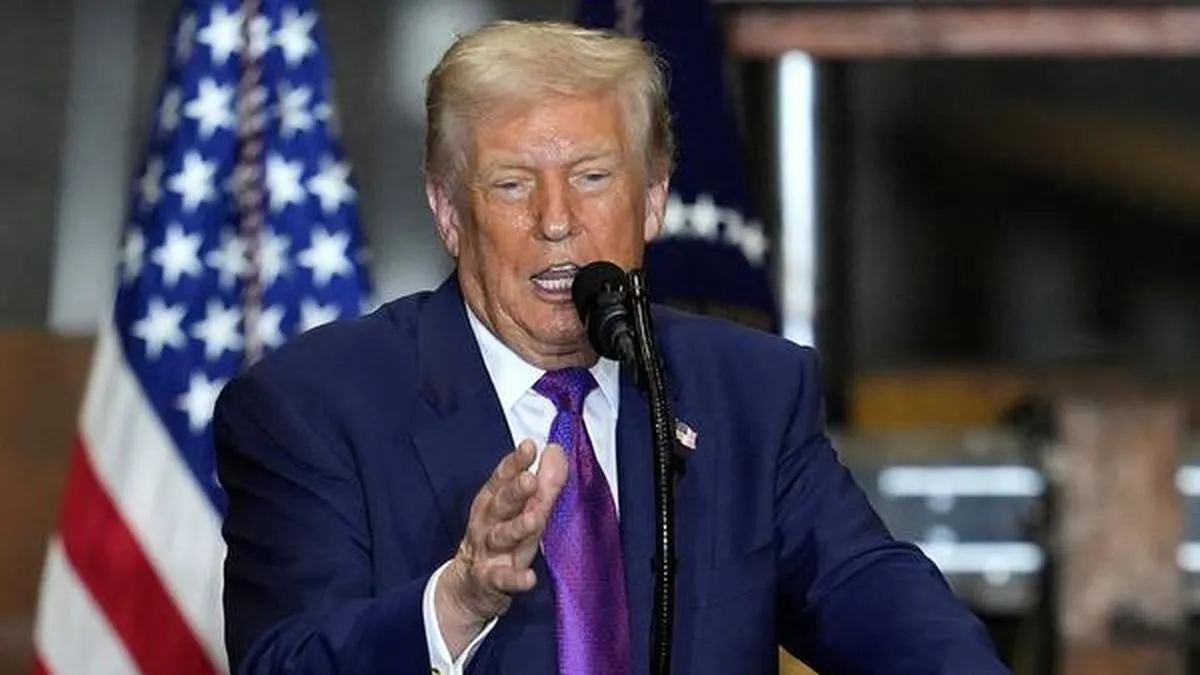
In a significant development for global trade dynamics, India is now set to face a lower tariff rate of 10% on certain exports to the United States following a new proclamation by former U.S. President Donald Trump. The decision comes in the wake of a U.S. Supreme Court verdict that clarified the executive branch’s authority in matters related to trade levies.
For India, a country that has steadily strengthened its economic relationship with the United States over the past two decades, this announcement marks an important moment. Trade policies often influence not only the flow of goods but also investor confidence, diplomatic ties, and long-term economic strategies. The reduction to a 10% tariff rate signals a shift from earlier, more aggressive trade measures and may open new possibilities for Indian exporters.
This blog explores the background of the decision, the Supreme Court’s role, its implications for India, and what it could mean for the future of Indo-U.S. trade relations.
Background: Trade Tensions and Tariff Politics
Trade between India and the United States has experienced both cooperation and friction over the years. During his presidency, Donald Trump adopted a more protectionist approach, emphasizing “America First” policies. Tariffs became one of the primary tools to address what he described as unfair trade practices and imbalances.
Under the administration of Donald Trump, the U.S. imposed additional tariffs on a range of imported goods from various countries, including India. These measures were often justified on national security grounds or under specific trade statutes that granted the executive branch authority to regulate imports.
India responded with its own calibrated measures, leading to a phase of strategic trade negotiations. While both countries avoided a full-scale trade war, tensions persisted, especially around issues like steel, aluminum, agricultural products, and market access.
The U.S. Supreme Court Verdict: Clarifying Executive Power
The turning point in this latest development was a verdict delivered by the Supreme Court of the United States. The Court’s decision addressed legal challenges concerning the scope of executive authority in imposing tariffs without direct Congressional approval.
The verdict reaffirmed certain powers of the executive branch while also clarifying procedural boundaries. This legal clarity paved the way for the new proclamation that adjusts tariff rates for specific countries, including India.
Although the ruling did not focus solely on India, its implications are global. By resolving ambiguities surrounding tariff authority, the Court effectively enabled a recalibration of existing levies. The 10% tariff rate now applicable to India reflects this recalibrated framework.
What the 10% Tariff Rate Means for India
A tariff reduction to 10% may appear modest at first glance, but in international trade, even small percentage changes can significantly affect competitiveness.
1. Enhanced Export Competitiveness
Lower tariffs make Indian goods more affordable in the U.S. market. Sectors such as pharmaceuticals, textiles, auto components, engineering goods, and certain agricultural products stand to benefit. A 10% tariff rate reduces cost pressures on American importers who source from India, potentially increasing order volumes.
For Indian exporters, especially small and medium enterprises, this shift could translate into improved margins and stronger positioning against competitors from other countries.
2. Boost to Investor Confidence
Trade stability often encourages foreign investment. The United States is one of India’s largest trading partners and a major source of foreign direct investment. A clearer tariff regime reduces uncertainty, making long-term planning easier for businesses operating in both markets.
Investors generally favor predictable regulatory environments. The Supreme Court’s involvement adds a layer of legal certainty that markets appreciate.
3. Diplomatic Signaling
Beyond economics, tariff decisions carry diplomatic weight. A reduced tariff rate can be interpreted as a gesture toward strengthening bilateral ties. The United States and India share strategic interests in areas such as defense cooperation, technology partnerships, and Indo-Pacific security. Trade policy often complements these broader geopolitical objectives.
Impact on Key Sectors
Different sectors in India are likely to experience varied effects from the new tariff structure.
Pharmaceuticals
India is known as the “pharmacy of the world,” supplying affordable generic medicines globally. A lower tariff rate can enhance the competitiveness of Indian pharmaceutical exports to the United States, where healthcare costs remain a sensitive issue.
Textiles and Apparel
The textile industry employs millions in India. Lower tariffs can make Indian garments and fabrics more attractive compared to products from countries facing higher trade barriers.
Engineering and Auto Components
India’s engineering goods sector has steadily expanded its presence in the U.S. market. A 10% tariff rate reduces the price gap between Indian products and domestic alternatives, encouraging U.S. manufacturers to maintain supply chains that include Indian partners.
How the U.S. Domestic Landscape Influenced the Decision
Trade policy in the United States is often shaped by domestic political considerations. The administration’s approach to tariffs reflects concerns about manufacturing jobs, trade deficits, and supply chain security.
By setting tariffs at 10% rather than maintaining higher rates, policymakers may be attempting to strike a balance between protecting domestic industries and avoiding excessive costs for American consumers and businesses.
The Supreme Court’s verdict also underscored the need for legal defensibility in trade actions. Future administrations may approach tariff decisions with greater caution, aware that such measures can face judicial scrutiny.
India’s Strategic Response
India has historically adopted a measured approach to trade disputes. Rather than escalating conflicts, it has often pursued negotiation and multilateral engagement.
In response to the revised tariff structure, India may focus on:
- Expanding trade talks to secure further concessions.
- Diversifying export markets to reduce dependence on any single country.
- Strengthening domestic manufacturing through initiatives such as “Make in India.”
- Encouraging value addition in exports to enhance global competitiveness.
India’s long-term strategy is likely to emphasize resilience and adaptability in a rapidly changing global trade environment.
The Broader Global Context
This tariff adjustment also occurs at a time when global supply chains are undergoing transformation. Geopolitical tensions, pandemic disruptions, and technological shifts have prompted many countries to rethink sourcing strategies.
India has positioned itself as a reliable alternative manufacturing hub. A lower tariff rate from the United States strengthens this positioning. Companies seeking to diversify away from other regions may view India as a more attractive partner.
Furthermore, the decision may influence how other countries perceive U.S. trade policy. If tariff recalibrations become more common following judicial clarification, global markets could experience greater predictability.
Challenges That Remain
While the 10% tariff rate is a positive development, challenges persist.
- Tariffs still represent an added cost compared to free trade arrangements.
- Trade disputes over digital services taxes, data localization, and intellectual property could resurface.
- Political changes in either country may alter trade priorities.
Businesses must remain vigilant and adaptable. Trade relationships are dynamic, influenced by elections, economic conditions, and shifting geopolitical alliances.
Looking Ahead: Opportunities and Caution
The reduction to a 10% tariff rate presents a window of opportunity for India. Exporters should capitalize on improved access to the U.S. market while preparing for potential fluctuations in trade policy.
Strengthening supply chain efficiency, investing in quality standards, and exploring strategic partnerships in the United States can help Indian companies maximize benefits from the new framework.
At the same time, policymakers must continue engaging in constructive dialogue to address lingering issues and prevent future trade friction.
Conclusion: A Step Toward Trade Stability
India’s new 10% tariff rate following Donald Trump’s proclamation and the U.S. Supreme Court verdict represents more than a simple numerical adjustment. It reflects evolving legal interpretations, shifting political strategies, and the complex interplay between economics and diplomacy.
For India, the development offers a cautiously optimistic outlook. It enhances competitiveness, supports exporters, and signals a willingness to recalibrate trade measures within a structured legal framework.
For the United States, the move demonstrates the balancing act between domestic priorities and international partnerships.
Ultimately, the true impact will depend on how both nations build on this moment. If approached strategically, this tariff adjustment could serve as a stepping stone toward deeper economic collaboration and a more stable trade relationship in the years ahead.