The Central Board of Secondary Education (CBSE) is moving forward with major curriculum reforms that could reshape how students learn in India. As education evolves with changing global demands, CBSE’s new curriculum updates have gained attention for making certain subjects more structured and future-oriented. Among the most talked-about changes is the focus on introducing a third language, artificial intelligence (AI), and vocational education as compulsory components of the curriculum.
This move reflects India’s broader push to align school education with the goals of the National Education Policy (NEP). The aim is to create students who are not only academically strong but also skilled, adaptable, and ready for modern careers.
The introduction of compulsory AI and vocational education is especially significant because it shows that CBSE is shifting from purely theory-based learning to a more practical and technology-driven model.
This blog explores what CBSE’s new curriculum changes mean, why they are being introduced, and how students, parents, and schools may be affected.
Why CBSE Is Introducing a New Curriculum
Education in India has traditionally focused on memorization and exam performance. While this system has produced many successful professionals, it has also been criticized for not preparing students for real-world challenges.
Today, the world is changing faster than ever. Careers are being shaped by technology, automation, and new industries. Students need more than just textbook knowledge. They need skills such as problem-solving, communication, creativity, and digital literacy.
CBSE’s new curriculum aims to bridge this gap by adding subjects that develop language ability, technical understanding, and practical skills. By making AI and vocational education compulsory, CBSE is signaling that schools must focus on skill-building along with academics.
The addition of a third language also supports cultural learning and communication abilities, which are becoming increasingly valuable in a multilingual and global society.
Third Language: A Step Towards Multilingual Education
One of the biggest highlights of the new curriculum is the introduction of a third language. India is a country with enormous linguistic diversity, and learning multiple languages has always been a part of Indian education.
However, in many schools, language learning has been limited to English and one additional language such as Hindi or a regional language.
By adding a third language, CBSE is encouraging students to become multilingual. This aligns with the NEP vision, which promotes language learning as a key part of cognitive development.
Why Learning a Third Language Matters
Learning a third language can offer several advantages:
- It improves memory and brain function
- It develops better communication skills
- It increases cultural understanding
- It helps students adapt in different regions of India
- It strengthens future career opportunities in global industries
Language learning is not just about speaking. It also improves reading, writing, and analytical skills. Students who learn multiple languages often develop stronger thinking abilities and better academic performance overall.
Challenges of a Third Language
While the concept is positive, it also comes with challenges. Many students already struggle with two languages, especially if their home environment supports only one language.
Schools will need trained teachers, proper textbooks, and supportive teaching methods to ensure students do not feel burdened.
If implemented carefully, the third language policy could become a major strength for Indian students. But if handled poorly, it could add unnecessary academic pressure.
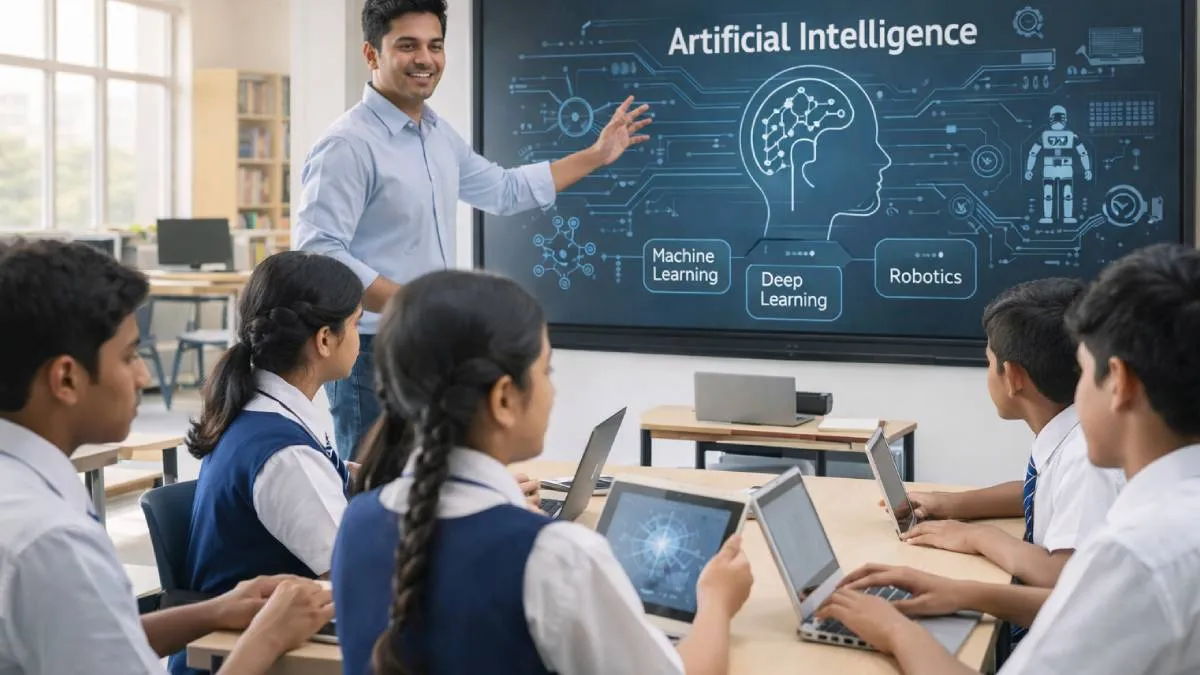
AI Education Becomes Compulsory: Preparing Students for the Future
Artificial Intelligence is no longer just a technology topic for engineers. AI is now part of daily life. From smartphones to online shopping, from social media to healthcare, AI is everywhere.
By making AI education compulsory, CBSE is acknowledging that students must understand how modern technology works. This is not about teaching advanced programming to everyone, but about building awareness and basic skills.
What AI Education May Include
CBSE’s AI curriculum is expected to include:
- basics of AI and machine learning
- understanding how AI systems work
- practical applications of AI in daily life
- ethical concerns and responsible use
- data handling and basic digital literacy
- simple coding concepts or AI projects
The goal is to make students familiar with AI concepts so they can adapt to future career demands.
Even students who choose non-science streams can benefit from AI education because technology is now linked with every field, including business, arts, media, and healthcare.
Why AI Knowledge Is Important for Students
AI will play a major role in future job markets. Many traditional jobs are being automated, and new careers are emerging.
Students with AI awareness will have an advantage in fields such as:
- software and technology
- finance and banking
- digital marketing
- healthcare and research
- robotics and engineering
- business analytics
Even if a student does not become an AI expert, understanding AI will help them work efficiently in modern workplaces.
It also builds logical thinking and problem-solving skills, which are useful in every subject.
Vocational Education Becomes Compulsory: Skill-Based Learning in Schools
One of the most impactful reforms in CBSE’s new curriculum is the compulsory inclusion of vocational education. This marks a major shift in the mindset of Indian education.
For decades, vocational training was considered secondary or only meant for students who were not academically strong. This thinking is changing now.
Vocational education is being introduced to make students skilled and job-ready. It focuses on practical learning and real-world career exposure.
What Vocational Education May Include
Vocational education may offer training in areas such as:
- computer applications and IT skills
- retail and marketing basics
- agriculture and food processing
- healthcare support and first aid
- electrical and mechanical work
- fashion designing and textiles
- hospitality and tourism
- media and communication skills
The subjects may vary depending on school facilities and local demand.
The main goal is to ensure that students develop at least one practical skill by the time they complete school.
Why Vocational Education Is Important
Vocational education is important because it prepares students for life, not just exams.
Some key benefits include:
- practical career exposure at an early stage
- better employability for students
- confidence in real-world tasks
- development of entrepreneurship mindset
- reduced dependency on only academic degrees
Many students finish school without knowing what career path they want. Vocational education can help them explore different fields and understand their strengths.
It also encourages respect for skilled work, which is essential for building a strong economy.
How These Changes May Impact Students
For students, CBSE’s new curriculum can bring both opportunities and challenges.
On the positive side, students will gain a more balanced education. Instead of focusing only on textbooks, they will learn languages, technology, and practical skills.
This can make learning more interesting and meaningful.
However, some students may initially feel pressure because compulsory subjects increase workload. Schools will need to ensure that teaching methods remain student-friendly and stress-free.
Students will also need guidance to manage time and focus equally on academics and skill-based learning.
Overall, if implemented correctly, these reforms can create a more modern learning experience.
Impact on Schools and Teachers
These reforms will require schools to upgrade their infrastructure and teaching methods.
To teach AI, schools may need:
- computer labs and internet facilities
- trained teachers
- project-based learning tools
- updated curriculum resources
For vocational education, schools may need partnerships with skill centers, trainers, and local industries.
Teachers will also need training because many educators may not have experience in AI or vocational subjects.
This change may initially be challenging for rural and smaller schools due to limited resources. CBSE and government support will be important to ensure equal implementation across regions.
What Parents Should Understand
Parents play a major role in how students adapt to curriculum changes. Many parents still believe that only traditional subjects like science and mathematics matter for success.
However, the world is changing. Skills like AI awareness, communication, and vocational training are becoming equally important.
Parents should support their children in exploring these subjects without forcing them to focus only on marks.
They should also encourage practical learning and help students understand that vocational education is not inferior, but an important part of career growth.
The new curriculum is designed to build well-rounded students, not just exam toppers.
How This Aligns with National Education Policy
CBSE’s curriculum changes strongly reflect the vision of the National Education Policy. NEP focuses on:
- holistic development
- skill-based education
- reduced rote learning
- multilingual education
- preparing students for global opportunities
By introducing third language learning, AI education, and vocational training, CBSE is implementing these NEP goals in a structured way.
This is a step toward making Indian education more modern and competitive globally.
Conclusion
CBSE’s new curriculum reforms are a major step toward transforming school education in India. By making third language learning, artificial intelligence, and vocational education compulsory, CBSE is preparing students for a future where skills and adaptability matter as much as academic knowledge.
These changes can help students become multilingual, technologically aware, and practically skilled. They can also improve career opportunities and reduce the gap between education and employment.
However, successful implementation will depend on how well schools, teachers, and parents support students through this transition.
If managed effectively, CBSE’s new curriculum could mark the beginning of a smarter, more practical, and future-ready education system in India, one that empowers students to succeed not only in exams but also in life.