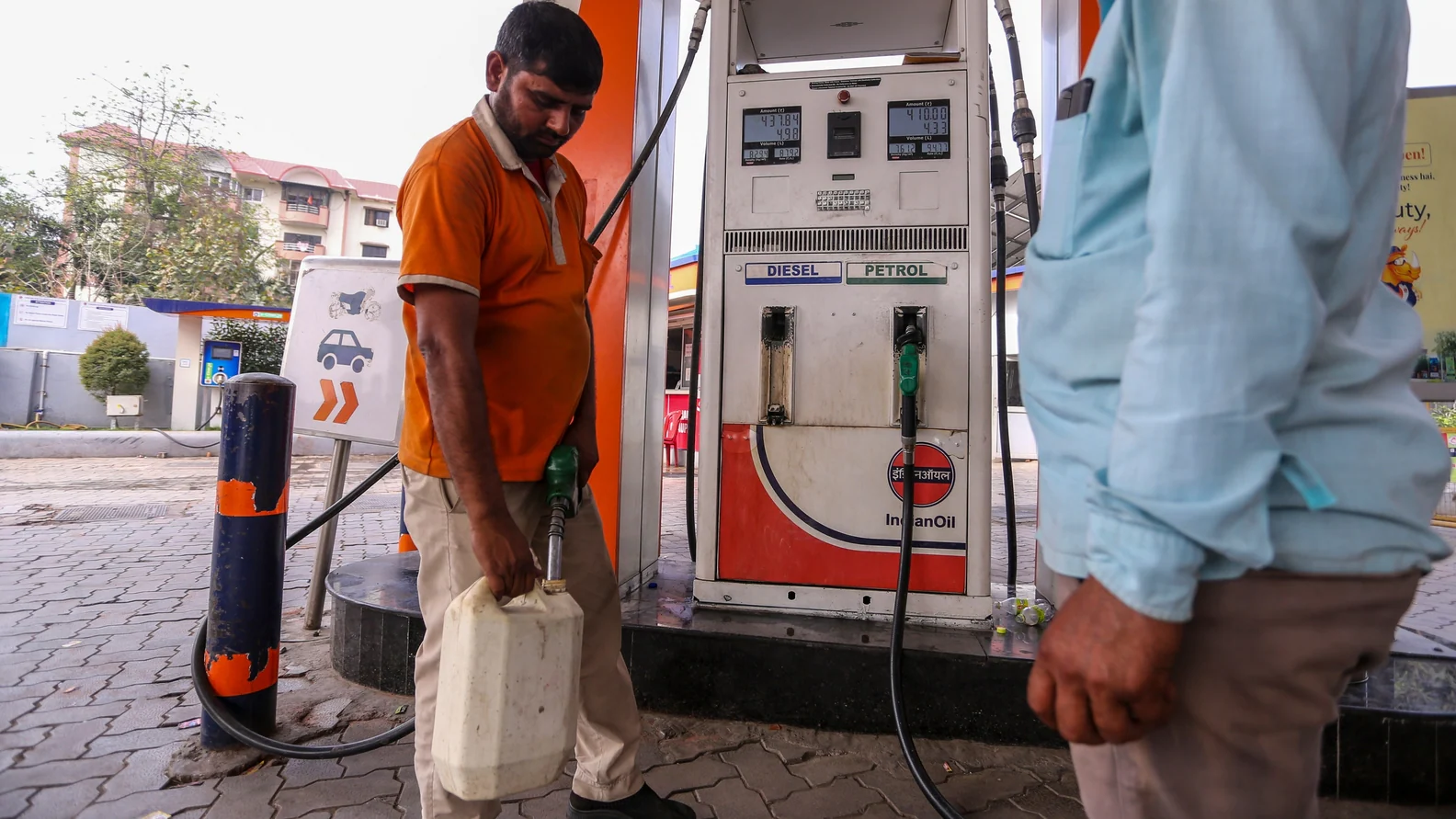
Fuel prices are one of the most visible and debated public policy issues today. Every time petrol and diesel prices go up at the pump, people feel it in their daily lives whether for commuting, transporting goods, running businesses, or simply managing household budgets. That sensitivity is rooted in the fact that fuel spending ripples across every sector of the economy. Yet while global crude oil markets trigger much of the attention, domestic tax policy plays an equally powerful role in determining what motorists pay.
Recently, the government announced a cut in excise duty on petrol and diesel. Specifically, the special excise duty on petrol was sharply reduced and the levy on diesel was cut to nil a move described as a means to protect consumers amid rising global crude prices. But that decision also reignites an important question: how do fuel taxes actually fill government coffers, and who ultimately benefits from this flow of money? To understand this, we must take a detailed look at how fuel is taxed, where the revenues go, and how changes in these taxes affect public finance and citizens.
Understanding Fuel Taxes: The Layers Behind the Pump Price
When you fill your vehicle with petrol or diesel, you are paying more than just the cost of oil and refining. A significant portion of that price comes from taxes. In broad terms, fuel in India is taxed at multiple levels:
1. Central Excise Duty
Excise duty is a tax imposed by the Union government on the production or manufacture of goods meant for domestic consumption. In the case of petrol and diesel, it is a fixed amount levied per litre, regardless of price fluctuations in global markets. This tax is collected by the central government before the fuel even enters retail distribution. Excise makes up a substantial share of the final pump price.
2. Cess and Additional Levies
On top of basic excise duty, the central government often imposes cesses or additional duties earmarked for specific purposes, such as infrastructure or road development. Although such cesses are collected along with excise, in many cases the total amount is retained entirely by the Centre rather than shared with states.
3. State Value-Added Tax (VAT) or Sales Tax
After excise, fuel is also taxed by state governments. Each state determines its own VAT rates on petrol and diesel, and these can vary significantly across the country. State taxes are typically calculated as a percentage of the fuel’s selling price, meaning they rise and fall with retail prices.
Together, central and state taxes can account for nearly half or more of the retail price of petrol and diesel often around 45 to 55 percent.
How Fuel Tax Revenues Flow Into Government Coffers
Let’s break down how fuel tax revenues are collected and allocated.
Central Government Receipts
The largest share of fuel tax revenue comes from excise duty and associated cesses collected by the central government. This revenue flows into the central exchequer specifically the Consolidated Fund of India where it becomes part of overall government revenues. These funds are not usually earmarked for a single purpose and are used to finance a wide range of public expenditures, including:
- Infrastructure development, such as national highways and bridges
- Defense and internal security
- Social welfare programs
- Subsidies in other sectors (e.g., food, fertiliser)
- Interest payments on government debt
Data from the Petroleum Planning & Analysis Cell shows that excise duties on petroleum products contribute hundreds of thousands of crores annually to the central exchequer, making them one of the most significant sources of indirect tax revenue.
State Government Revenues
State governments collect substantial sums from VAT and other local levies on petrol and diesel. These funds go into state budgets and are used to finance public services within the states, such as:
- Road construction and maintenance
- Health and education spending
- Urban and rural local infrastructure
- Public transport subsidies
For many states, fuel tax receipts represent one of the largest single streams of revenue outside of goods and services tax collections.
Together, central and state fuel taxes provide a dependable fiscal cushion. Unlike some other taxes that fluctuate with economic cycles, fuel taxes tend to remain stable because people continue to consume fuel even during downturns. That stability makes them attractive from a revenue planning perspective.
Why Petrol and Diesel Are Outside GST
In India, most goods and services are covered under the Goods and Services Tax (GST), a unified national tax system. However, petrol and diesel remain outside GST. This means both the central government and state governments retain the autonomy to levy their respective taxes excise and VAT without having to share revenue under the GST mechanism. That arrangement gives governments greater flexibility in taxation but also makes fuel taxes a more direct driver of revenue rather than a shared GST pool.
Who Gets the Money and Who Suffers the Consequences?
Fuel taxes may fill government coffers, but who benefits means looking from multiple angles citizens, government, and businesses.
1. Central and State Governments
The most direct beneficiaries of fuel tax revenues are the governments themselves. These revenues support budgetary functions and fund public goods that benefit society at large, such as transportation infrastructure and social services.
However, governments also bear budgetary risks when they choose to cut these taxes. A cut may be introduced to shield consumers or industries from global price shocks, but it reduces the revenue available for other spending priorities. For example, the recent reduction in excise duty on petrol from ₹13 per litre to ₹3 per litre, and the removal of duty on diesel, represents a direct hit to the central government’s tax intake.
2. Consumers
While tax cuts are often pitched as relief for consumers, the immediate impact can be more complex. For instance, in this latest excise duty cut scenario, consumers may not see a significant drop in retail pump prices right away because oil marketing companies may absorb the tax cut themselves to offset losses from higher crude prices. This means the financial benefit intended for motorists might instead help balance corporate margins, rather than translate directly into cheaper fuel.
Even when tax cuts do reduce retail prices, the effect tends to be modest compared to the overall price drivers like crude oil rates and exchange rates.
3. Oil Marketing Companies
Oil marketing companies (OMCs) such as Indian Oil Corporation, Hindustan Petroleum, and Bharat Petroleum often operate on thin marketing margins that can be squeezed during periods of high crude prices. When governments cut excise duties, OMC margins may improve if retail pump prices remain unchanged, providing some financial cushion to these companies. This was also one of the stated motivations for the recent excise cut to alleviate some of the under-recoveries faced by these firms.
4. Broader Economy
Fuel prices have a cascading effect on the broader economy. Lower domestic fuel costs can help control inflation because transportation costs are a major input for food and goods prices. On the other hand, reduced tax revenues can constrain fiscal space, potentially leading the government to cut spending in other areas or borrow more.
The Trade-Off: Revenue vs Stability
Cutting fuel taxes is more than a gesture to consumers. It is a policy decision with fiscal consequences. Governments must balance the need for revenue with economic priorities such as inflation management and cost pressures.
When crude oil prices surge as they have recently due to geopolitical tensions — a government may choose to absorb some of the shock through tax cuts in order to prevent retail prices from spiking sharply. That is essentially what the latest excise duty reduction aims to do: protect consumers and companies from volatile global markets, even if it means lower tax intake in the short term.
But this approach comes at a cost. Revenue losses from fuel tax cuts can stretch finances, especially if they are sustained over a long period. Governments must then find alternative sources of revenue or reduce expenditures elsewhere.
The Bigger Picture: Taxation, Public Services, and Accountability
Fuel taxes are not just a way to raise money they are a fundamental part of how public goods are financed. Roads, public transport systems, and safety nets all rely on tax flows that include fuel levies. Citizens effectively pay for these services indirectly when they purchase petrol or diesel.
This underscores the importance of transparency and accountability in how fuel tax revenues are used. Taxpayers have a right to understand not only how much they are paying at the pump but where those payments are going and how they are benefiting society.
Conclusion: Fuel Tax Cuts Are Not Just About Fuel Prices
The recent petrol excise cut has thrust fuel taxation back into the spotlight. It is clear that fuel taxes are a cornerstone of government revenue filling central and state coffers, funding crucial public services, and shaping economic outcomes. At the same time, how that revenue is balanced against the need for consumer relief and economic stability remains a delicate policy challenge.
Fuel taxes are not merely a line item in government budgets. They are a powerful fiscal tool that affects citizens, businesses, and the economy as a whole. Understanding how these taxes work and who benefits from them is key to engaging with policy debates over fuel pricing and public finance.